
How Many CCTV Cameras Do You Need? A Room-by-Room Planning Guide
Plan camera numbers by risk, not by guesswork. This step-by-step guide helps homes, shops and offices decide how many cameras they need and where.
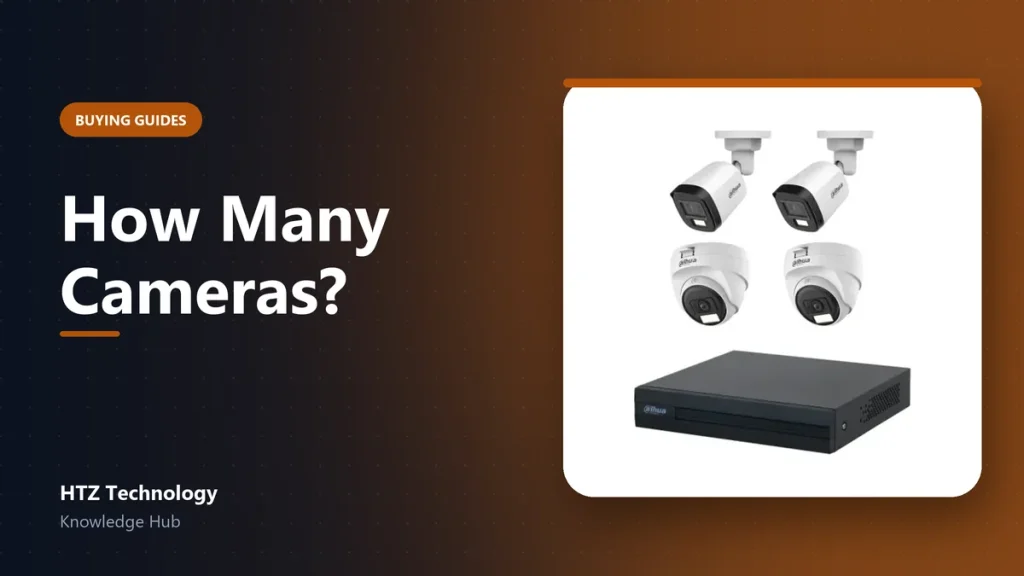
Too few cameras leave blind spots. Too many waste money and storage. The right number comes from a simple planning process that you can do with a floor plan and a pen.
Step 1: List what you want to protect
- Entrances and exits (people coming in and out)
- Cash counters and high-value stock
- Parking, gates and boundaries
- Main corridors and stairs
- Store rooms and loading areas
Step 2: Decide what each camera must show
| Purpose | What you need |
|---|---|
| Observe | See general activity in a large area |
| Recognise | Recognise a known person |
| Identify | Clearly identify a stranger’s face or a number plate |
Identification needs the camera closer or with a narrower lens. Usually that means a dedicated camera at each entrance.
Step 3: Typical starting points
- Apartment: 2 to 4 cameras (door, corridor, balcony, main room).
- House: 4 to 8 cameras (gate, front door, back door, sides, inside corridor).
- Small shop: 4 to 8 cameras (entrance, counter, aisles, store room).
- Office floor: 8 to 16 cameras (reception, entrances, corridors, server room, work areas).
These are starting points only. Walls, shelves and layout change the final number.
Step 4: Check the blind spots
Mark each camera’s view on the floor plan as a cone. Look for gaps along the route an intruder would take from the boundary to valuables. Fill gaps by adjusting angles first, adding cameras only when needed.
Step 5: Do not forget the rest of the system
- Recorder channels and hard disk size
- Cable routes and PoE or power supplies
- UPS for the recorder
- Monitor and phone viewing
Not sure about your layout? A site survey gives a camera plan based on your actual building.
Products mentioned in this guide
Genuine products with official warranty, delivered anywhere in Bangladesh.