AI & Smart Security

Cameras that tell you what matters

Ordinary CCTV records everything and explains nothing. AI cameras separate people and vehicles from leaves, shadows and insects, raise an alert only when something real happens, and help you find an incident in minutes instead of hours. This guide shows what the technology really does, what the public data says, and how HTZ designs it for your site.

  • 94–98% of police burglar-alarm calls were false in US studies. Filtering is the first job of AI. Source ↗
  • $28.8B forecast AI video analytics market for smart cities by 2030, up from $8.5B in 2025. Source ↗
  • 11,000 more CCTV cameras planned by Dhaka Metropolitan Police, on top of the ~1,910 reported operational. Source ↗
  • 33 AI & smart security products in our shop, from edge cameras to face-recognition servers. View shop →

Real-world data

Why AI belongs in your security plan

The numbers below come from public sources, linked on each card. Where a figure is old or comes from a vendor, we say so.

Problem

Most alarms are not real

A US Department of Justice guide found that 94 to 98 percent of police alarm calls were false. In 2002 US police responded to about 36 million alarm activations. Plain motion detection behaves the same way: it reacts to any change in pixels, so a falling leaf, a cat or a headlight sweep is treated like an intruder. Guards and owners soon stop trusting a system that cries wolf.

What we take from it: a camera that can tell a person from a shadow is worth more than one that simply has more megapixels.

Local market

Dhaka is adding cameras fast

Dhaka Metropolitan Police reported about 1,910 operational cameras and announced 11,000 more. The Business Standard reported local video-surveillance sales growing around 50 percent a year over four to five years, with national spending near Tk 500 crore (an older estimate).

What we take from it: more cameras mean more footage. Without search and alerts, nobody can watch it all.

Rules

Where regulators already expect cameras

A 2014 Bangladesh Bank circular asked banks to fit CCTV with digital recording at branch entrances, inside and outside buildings, connected to a central network and running round the clock. A December 2014 circular added CCTV in IT and data-centre rooms under the ICT Security Guideline. In 2018 Police Headquarters directed mall owners to install CCTV. We did not find a published retention period in Bangladeshi rules, so storage is sized to the days your own policy or auditor requires.

What we take from it: coverage points are often decided for you. The quality of what the camera understands is your choice.

Direction

The industry is moving to AI at the edge

MarketsandMarkets forecasts the AI video analytics market for smart cities growing from USD 8.5 billion in 2025 to USD 28.76 billion by 2030 (27.6 percent a year), with edge-based analytics growing fastest. Technavio projects about USD 14 billion of growth between 2024 and 2029 at 31.7 percent a year. Market definitions differ, so treat these as direction, not exact size.

What we take from it: cameras that run the analytics themselves are becoming the normal choice, not a premium extra.

Capabilities

What AI cameras actually do

Eight things you can ask an AI system to do, what the public data says about each, and the honest limits.

Human & vehicle classification

The camera labels a moving object as human, vehicle or other and ignores leaves, rain, insects and small animals before it sends an alert.

What the data says
Hikvision says AcuSense can remove up to 90 percent of false alarm events. Dahua lists a false-alarm rate under 1 percent for SMD Plus (under 2 percent in some documents) and under 0.5 percent for small animals with SMD 4.0. All of these are vendor test results.
Honest limit
Results depend on the scene. Set zones and sensitivity on site and review the first week of alerts.
Best for
Homes, compounds, shops, warehouses, anywhere an alert must mean something.
Shop Perimeter AI Protection (10)

Perimeter intrusion & line crossing

Draw a virtual fence or zone. A person who crosses the line or stays inside the zone triggers an alert, and only people and vehicles count.

What the data says
This is the filtered version of motion alarms, so the 94 to 98 percent false-alarm history of ordinary alarms is exactly the problem it targets.
Honest limit
A camera sees a flat picture, so the line must follow the real ground. We mark it with a person walking the route.
Best for
Boundary walls, rooftops, factory yards, schools and mosques after hours.
Shop Perimeter AI Protection (10)

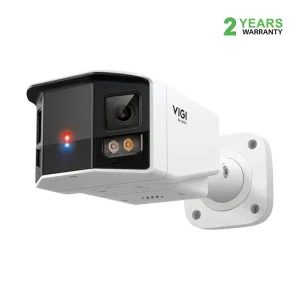
Active deterrence: strobe light and voice

When a person is detected, the camera flashes a strobe and plays a recorded warning, so a visitor learns they are being watched before anything is taken.

What the data says
Hikvision’s audio-and-strobe AcuSense cameras have a built-in speaker up to about 60 dB covering roughly 15 metres, an adjustable strobe pattern and two-way audio from the mobile app, in 4 MP to 8 MP models.
Honest limit
The warning must be set to the right hours and message so it does not disturb neighbours or staff.
Best for
Shops after closing, warehouses, construction sites, building entrances.
Shop Active Deterrence Cameras (7)

Face detection & recognition

Compare faces against a list for attendance, door access, VIP recognition or a watch list. Usually runs on a recorder or an AI server.

What the data says
NIST publishes continuous tests of face algorithms at a fixed false-match rate of one in a million, and its researchers warn that a single “accuracy percentage” is misleading. The Stanford AI Index reported error rates on visa and mugshot style photos falling from near 50 percent to a fraction of a percent by 2020.
Honest limit
Lab photos are not corridors. Backlight, angle, masks and distance lower accuracy, and consent and notices are your responsibility.
Best for
Offices, banks, schools, factories with controlled entrances.
Shop Face Recognition AI Servers (6)

Number plate recognition (ANPR)

A dedicated camera reads plates at a gate and can open a barrier for approved vehicles or log every visitor.

What the data says
One accuracy analysis puts modern ANPR above 99 percent in controlled lanes and at 90 to 98 percent in real-world conditions. In a vendor test with the camera about 6 feet from the car, plates were read correctly up to a 70 degree angle and failed at 75 degrees.
Honest limit
Headlights, speed, dirty plates and steep angles decide the result. Use an infrared ANPR camera, not a general-purpose one.
Best for
Factory and campus gates, parking, residential towers.
Shop Automatic Number Plate (ANPR) (1)

People counting & heat maps

Count entries and exits, measure queue length and see on a floor plan where people spend time. Staff rosters and shelf layouts can follow the data.

What the data says
This is a business tool more than a security one: the camera produces numbers by hour and zone that you can export, instead of footage you have to watch.
Honest limit
Counting works best from an overhead or steep-angle camera over a single doorway. Wide scenes lose accuracy.
Best for
Retail stores, bank halls, showrooms, malls.
Shop Heat Mapping Cameras (9)

Smart codecs: less storage per day

AI-assisted compression such as H.265+ lowers the bitrate when the scene is quiet, so the same disks hold more days of video.

What the data says
Hikvision’s own 24-hour tests showed H.265+ files 79 to 82 percent smaller than H.264. Independent IPVM tests found smart codecs from several makers cut bandwidth 50 to 90 percent, most in still scenes, while early plain H.265 cameras saved only 20 to 30 percent.
Honest limit
Busy scenes save much less. We size disks on the cautious end of the range, not the brochure.
Best for
Any system with long retention or many cameras.

Straight talk

Brochure claims vs what we plan for

Most numbers in AI brochures come from the maker’s own test scenes. We keep the claim, check it against independent data where it exists, and design for the realistic case.

The claimWhat independent data showsHow HTZ plans around it
AI cuts false alarms by up to 90 percentHikvision (vendor)No neutral controlled test found. Published figures range from about 40 percent to over 90 percent depending on product and scene.We tune zones on site, run a trial week and adjust before handover.
False-alarm rate under 1 percent (SMD Plus)Dahua (vendor, standard test scenes)Dahua publishes no baseline for plain motion detection and a different sheet says under 2 percent, so the reduction cannot be calculated.We judge on your own site’s night footage, not a brochure scene.
H.265+ saves up to 80 to 90 percent storageHikvision, Dahua (vendor)IPVM found smart codecs saved 50 to 90 percent, best in still scenes, and early plain H.265 only 20 to 30 percent.We size storage for a busy scene and treat the saving as a bonus.
99 percent plate recognitionANPR marketingControlled lanes can reach 99 percent or more. Real roads are reported at 90 to 98 percent, and steep angles fail completely.Dedicated infrared camera, correct angle and speed, and a manual fallback for gates.
Face recognition is “99 percent accurate”General marketingNIST says one accuracy figure is misleading. Results depend on the photo quality, the match threshold and the people tested.We set a strict threshold, keep a second factor (card or PIN) for doors and test on your staff first.
AI search turns hours into minutesVideo platform vendorsBacked by customer stories and expected-time estimates, not controlled measurement.We demonstrate a real search on your own footage before you buy.

Design rules

What decides whether AI works on your site

Most failed AI projects fail on the installation, not the camera. These are the rules we design to.

How many pixels do you need?

The international video surveillance standard IEC 62676-4 describes four levels of detail, called DORI. Each needs a minimum number of pixels per metre across the subject. We pick the level for each camera position, then choose lens and mounting distance to reach it.

LevelPixels per metreWhat you can doTypical place
Detect25 px/mSomething is thereWide yards, car parks, perimeters
Observe62.5 px/mWhat a person is doing and their clothingCorridors, shop floors, hallways
Recognise125 px/mSomeone you already knowEntrances, reception, lobbies
Identify250 px/mWho a stranger is, beyond reasonable doubtDoors, cash counters, vault, gates
  1. Pixels on target, not megapixels

    AI needs enough pixels across the person or plate. Use the DORI table to choose lens and mounting distance for each camera, instead of buying one resolution for everything.

  2. Light the face, not the lens

    Avoid mounting a camera facing a bright window or open gate. Backlight turns faces into silhouettes and is the most common reason recognition fails.

  3. Height and angle

    Faces and plates read best when the camera looks only slightly downward. Very high or steep mounting is for overview and counting, not recognition.

  4. Separate cameras for separate jobs

    One camera cannot give a wide view and a readable plate at once. Use a wide AI camera for the yard and a dedicated infrared ANPR camera at the gate.

  5. Power and network budget

    AI, strobe and audio cameras draw more PoE power than basic ones. Add up the switch budget, and use fibre when a run passes the 100 metre Ethernet limit.

  6. Power cuts, damp and dust

    Use a UPS so recorders shut down cleanly, proper earthing and surge protection, and IP66 or IP67 housings with sealed cable entries for monsoon moisture, dust and insects.

  7. A tuning week

    Alerts are reviewed after the first days of live operation. Zones, sensitivity and schedules are adjusted so the final system sends only alerts you care about.

Architectures

Three ways to build an AI system

The right one depends on your camera count, what you want the AI to do and whether you already own cameras.

Edge AI

AI cameras + standard NVR

  1. AI camera
  2. PoE switch
  3. NVR
  4. Mobile alerts
Best for
Homes, shops, small offices and compounds. Human and vehicle alerts, line crossing, strobe and voice.
Strength
Lowest cost and simplest. The analytics run inside each camera, so alerts still work if the recorder is busy.
Watch out
Smart features depend on the camera model. Mixed brands can lose them.
Recorder AI

AI NVR + IP cameras

  1. IP cameras
  2. PoE switch
  3. AI NVR
  4. Search & alerts
Best for
Existing IP camera systems that need face, people counting or smart search without replacing every camera.
Strength
Adds intelligence to cameras you already own.
Watch out
The recorder has a fixed number of AI channels. Check it before you grow.
Server AI

GPU analytics server

  1. Cameras
  2. PoE switch
  3. AI server (GPU)
  4. VMS & dashboard
Best for
Banks, campuses, factories and chains: face recognition at scale, ANPR, heat maps and many sites on one dashboard.
Strength
Most powerful and flexible. One place to manage rules and users.
Watch out
Licences are normally per channel, and the GPU must handle every stream. Plan budget and rack space.

See a priced list for your industry

Pick your industry in the system builder to get the architecture, a buying guide and compatible products with live prices.

Open the system builder

By industry

How AI is used in your type of site

How we deliver

From survey to a tuned system

  1. 1

    Free site survey

    An engineer walks the site, marks every camera position and checks light, power and cable routes.

  2. 2

    Design & quotation

    You get camera positions with the pixel target for each, the architecture, a storage plan for your retention days and a priced list.

  3. 3

    Installation

    Cabling, mounting, power protection and network setup, then AI rules and zones on the live picture.

  4. 4

    Tuning week

    We review real alerts, remove nuisance triggers and adjust schedules until the alerts are useful.

  5. 5

    Handover & AMC

    Training, documentation and, if you wish, an AMC with monthly or yearly billing that keeps firmware, recordings and alerts healthy.

In our shop

AI & smart security products

Delivered to your home anywhere in Bangladesh.

See all AI & smart security products

FAQ

Questions we hear most

Do AI cameras work without internet?

Yes. Detection, classification and recording run on the camera or recorder inside your network. Internet is needed only for mobile push alerts and remote viewing.

Can I add AI to my existing CCTV?

Often yes. IP cameras can be paired with an AI NVR or analytics server. Old analog cameras can be kept for general recording, with AI cameras added at the key points such as gates and entrances. A site survey tells us what is possible.

Will AI replace my security guards?

No. It makes guards more effective by telling them exactly where to go and when. A person still has to respond to an alert.

How accurate is face recognition?

It depends on lighting, angle, distance and the match threshold you set. NIST warns that one accuracy number is misleading. We test on your own staff at the real door and keep a second factor for access control.

Is face recognition allowed?

You must treat faces as personal data. Put up clear notices, get consent from staff and students, limit who can see the data and keep it only as long as you need it. We can help you plan this, but please take legal advice for your own organisation.

How many days of recording can I keep?

As many as your disks allow. We calculate storage from the number of cameras, resolution, codec and how busy the scene is, and we plan on the cautious end of the savings range. You choose the retention days.

What does it cost?

It depends on the number of cameras and the type of analytics. Use the system builder to see a priced list for your industry, or book a free survey for a fixed quotation.

Not sure what your site needs?

Book a free survey. An engineer marks the camera positions, tests the light and gives you a written plan and a fixed quotation.

Sources and notes

Checked October 2026. Vendor figures are the makers’ own claims. Market forecasts use different definitions, so compare them as direction, not exact size. Always confirm product features and licences for the exact model before you buy.

  1. US Dept. of Justice COPS guide “False Burglar Alarms” (R. Sampson, 2002)
  2. MarketsandMarkets: AI video analytics market for smart cities
  3. Technavio: AI video analytic market 2025-2029
  4. Prothom Alo: 11,000 more CCTV cameras to be installed in Dhaka
  5. The Financial Express: DMP to install 11,000 more CCTV cameras
  6. The Business Standard: The economics of surveillance
  7. The Financial Express: Banks asked to install CCTV cameras (Bangladesh Bank circular, 2014)
  8. The Financial Express: Banks asked to install security cameras (Bangladesh Bank, 2014)
  9. The Financial Express: DMP tightens security ahead of Eid (2018 police directive on malls)
  10. Hikvision: AcuSense technology
  11. Hikvision: audio and strobe light camera with AcuSense
  12. Dahua: WizSense V2.0 catalog (SMD Plus)
  13. Dahua: WizSense “Focus on Human and Vehicle” catalog (SMD 4.0)
  14. IPVM: smart codec and H.265 savings discussion
  15. Hikvision: H.265+ takes video surveillance to the 4K era
  16. NIST Face Recognition Technology Evaluation (FRTE) 1:1 verification
  17. Stanford AI Index 2021 annual report (face recognition error trends)
  18. Plate Recognizer: ALPR accuracy results and camera-angle tests
  19. Carmen Cloud / Fora Soft: ANPR accuracy in controlled and real-world conditions
  20. Coram: customer stories on AI video search
  21. IEC 62676-4 (DORI pixel-density guidance for video surveillance)
Package Builder 0 Shopping Cart Quick Assist